
The challenge
Building the skills of community health workers: a central challenge for Africa
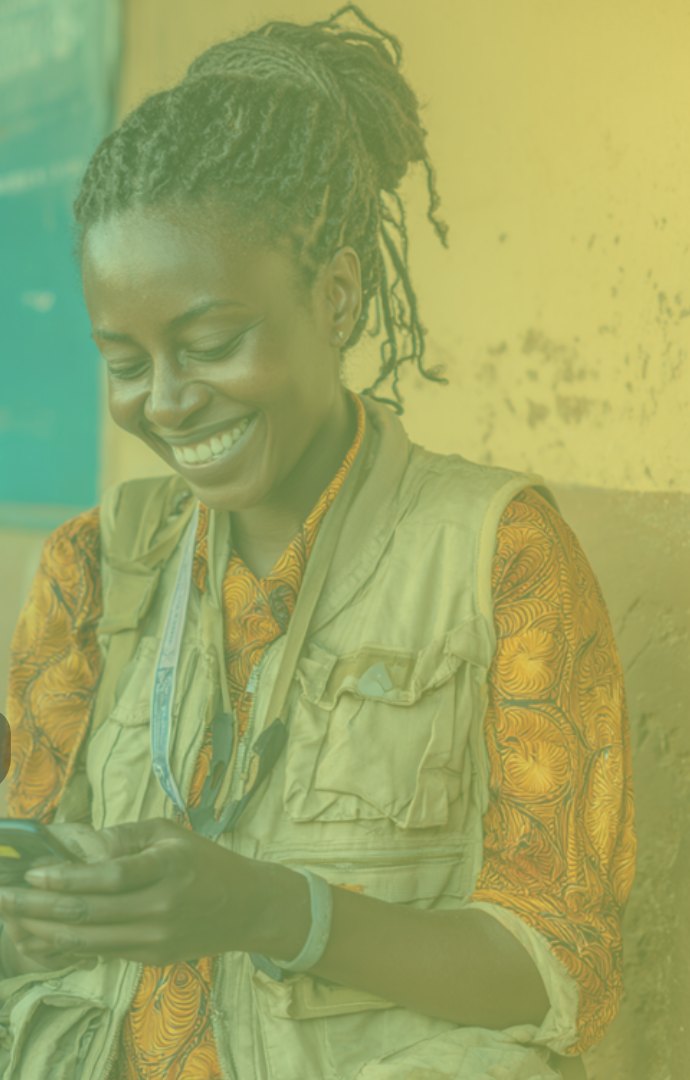
Community health workers (CHWs) are the first link in primary health care across Africa. In rural areas, they are often the only health contact a family ever has.
Their effectiveness depends on how regularly they are trained, and that is where health systems struggle: in-person training is expensive, logistically heavy and reaches only a few dozen workers at a time. Regular national coverage is beyond available budgets.
Digital delivery is the obvious answer, but it runs into a constraint that online solutions cannot engineer around: connectivity. Patchy network coverage, the cost of mobile data, digital literacy: a connected solution reaches the best-served workers and misses everyone else.
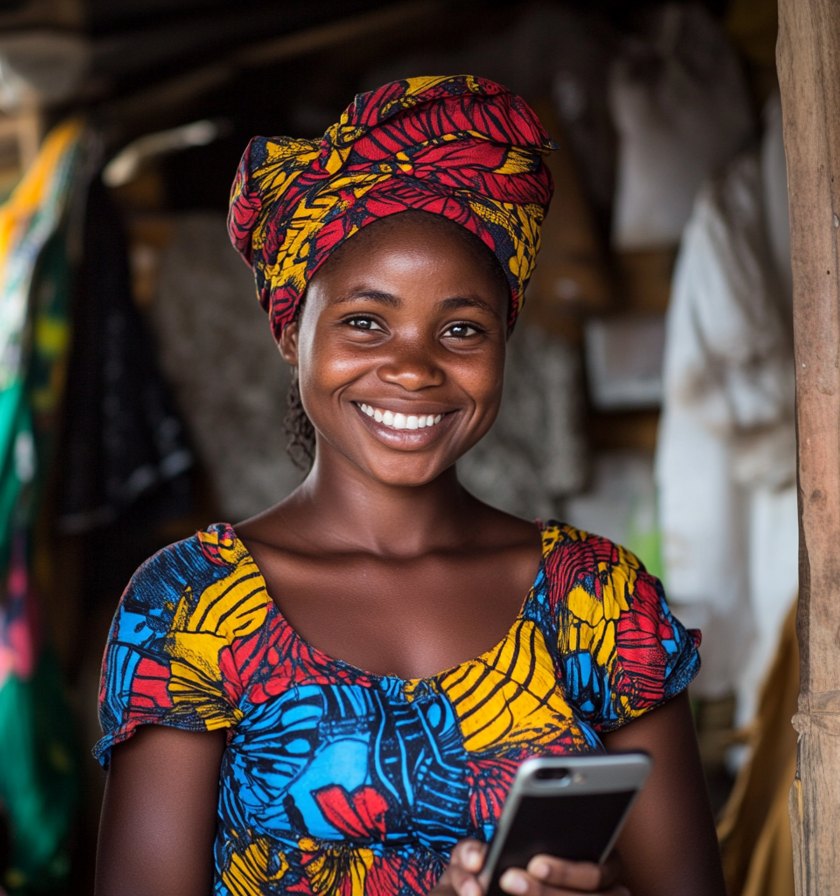
Source: Kajou field observations in Senegal.
Our solution
A 100% offline platform, inside the health worker’s phone
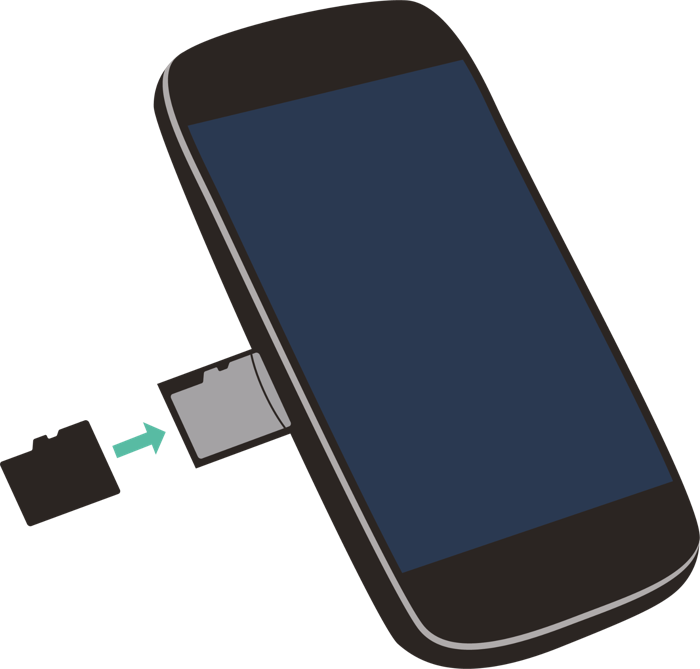
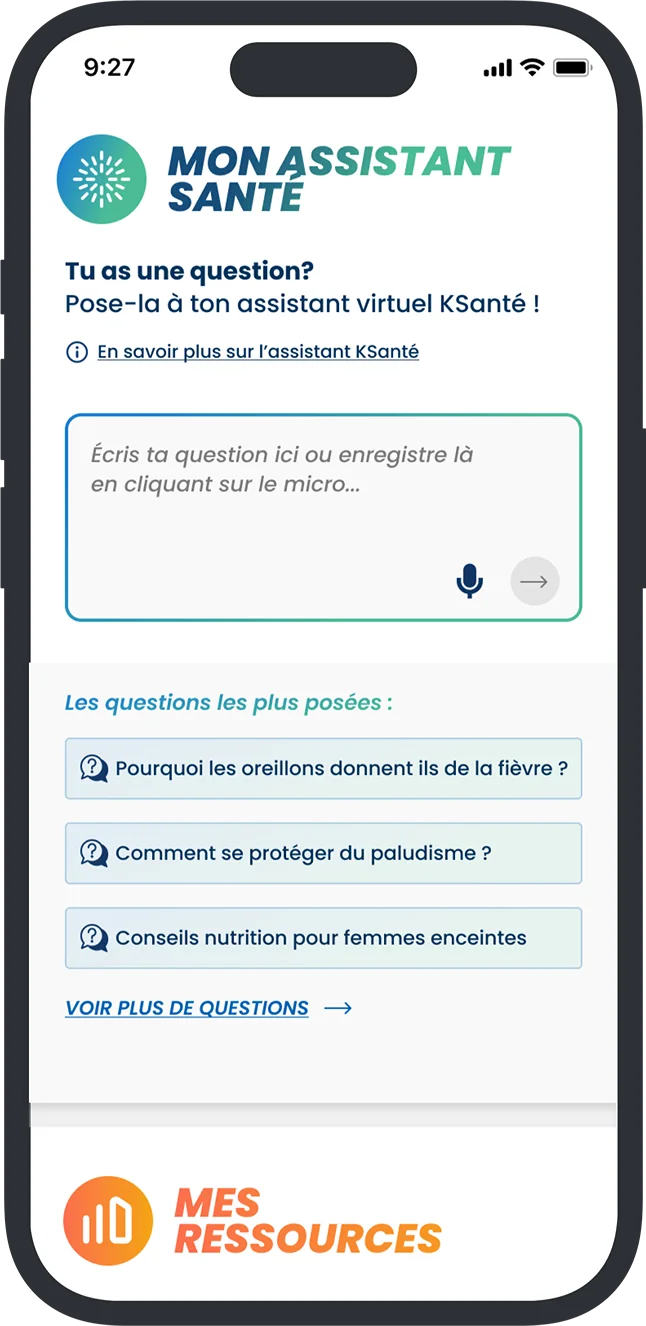
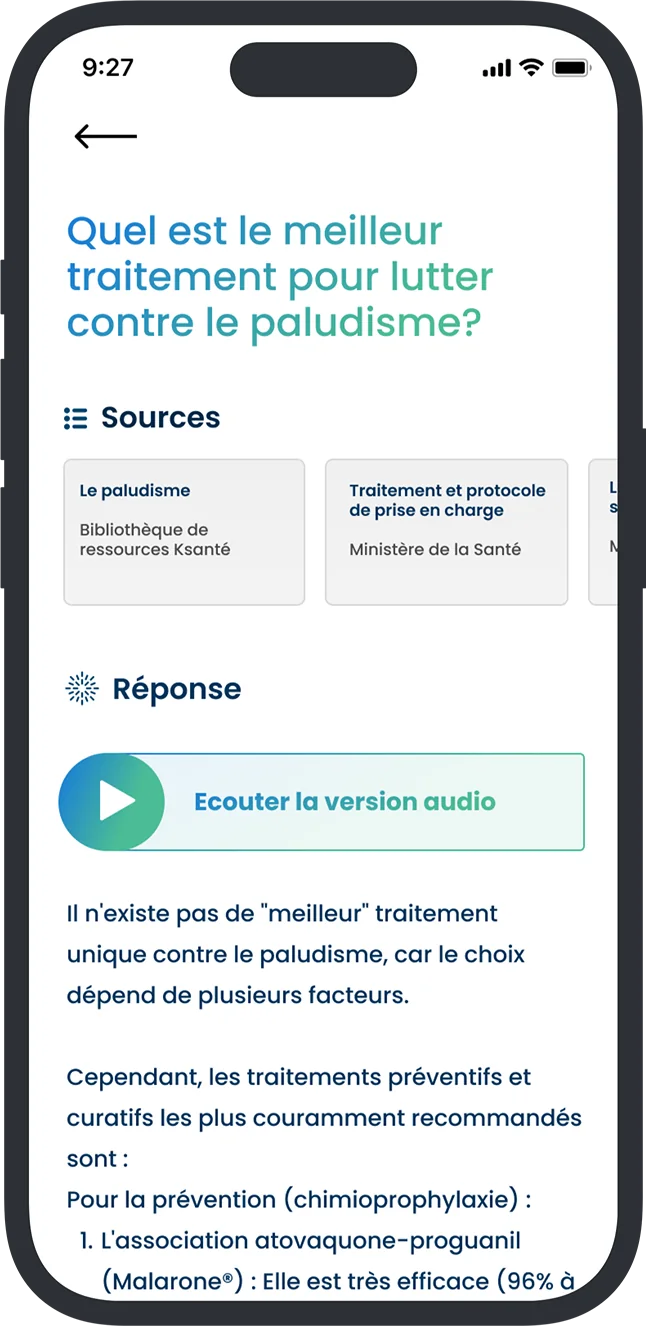
kSANTÉ is a training and practice-support app for community health workers. It runs entirely without an internet connection and combines three components, delivered on a microSD card inserted into the health worker’s smartphone.
On video
kSANTÉ explained in a few minutes
Kevin Abou Khalil, Kajou’s Director of Development, presents the solution and how it works in the field.
Watch the videoWhat kSANTÉ offers Ministries of Health and NGOs
Train at scale
Train and equip dispersed, poorly connected health workers that online programmes do not really reach.
Up-to-date information, available offline
An AI assistant and content built on the ministry’s protocols, kept up to date and available anywhere, even without a network.
See and engage
Continuous visibility on real usage and on health workers’ skills, and a direct channel to communicate with them and send them training content and information in real time.
Why kSANTÉ is different
Offline by design
Rich content and AI with no connectivity costs, including in the most remote areas.
Sovereign and transferable
Open architecture, content based on national protocols, progressive transfer to the State under a Build-Operate-Transfer model.
Interoperable
Designed to bring together the existing e-learning tools of ministries and NGOs, and to work alongside other e-health tools.
Frugal and scalable
Low-cost distribution on microSD cards and centralised management without heavy IT infrastructure.
A major innovation
Pre-generated AI that works without the internet
Conventional generative AI requires constant connectivity and heavy computing power, both scarce in rural Africa. kSANTÉ reverses the logic: answers are produced and validated upstream, then embedded on the card.
No text is generated on the phone. A lightweight semantic engine instantly retrieves, offline, the validated answer closest to the health worker’s question.

Pre-generation
From national guidelines and protocols, around 15,000 question-answer pairs are generated, then reviewed and validated by medical experts.
Embedding
The database is loaded onto the Kajou microSD card, inserted into the health worker’s smartphone.
Offline matching
An on-device classifier maps the question, asked in plain language, to the most relevant validated answer. No internet needed.
of offline AI answers rated relevant by health workers
[Exact source and scope to be confirmed]
Safeguards designed for health
No invented answers. Every answer is written in advance from national protocols and validated by experts.
Practice support, not a diagnostic tool. In case of doubt or danger signs, the health worker refers the patient to the health post.
Accessible. Answers in plain French with an audio version; Wolof and other local languages are being integrated.
No patient data. The assistant collects no information about patients.
The AI assistant is currently deployed in Senegal and will be activated in new countries as deployments progress.
An open infrastructure
Delivering new knowledge to health workers already equipped
Once health workers are equipped, kSANTÉ becomes a channel to deliver new training quickly, with no new hardware and no new distribution campaign.


Use case: mental health in Senegal
With the support of Being and Grand Challenges Canada, we are deploying a mental health component to community health workers already equipped with kSANTÉ in Senegal: new training modules, and an AI assistant trained to answer their questions on these topics. Other themes are in progress, such as parenting and non-communicable diseases.
Do you have content to share with health workers?
Our digital learning studio in Dakar helps you turn it into interactive modules, in French and local languages, deliver it on the cards already in circulation and train the AI assistant on your guidelines. The dashboard then measures usage.
Propose a training programmeTheory of change
From training health workers to better public health
INPUTS
- Training and an AI assistant available on a smartphone, at any time and without the internet.
- No infrastructure beyond the health worker’s phone, alongside in-person training or not.
- Content co-created and validated by national health authorities.
OUTPUTS
- Health workers follow certified continuous training and use the AI assistant, at a lower cost than in-person training.
- Authorities track health workers’ progress and receive regular reports on the questions asked.
OUTCOMES
For health workers
Stronger knowledge, faster and more relevant care, greater motivation.
For governments and NGOs
Visibility on usage and skills, better-informed decisions, a direct channel to health workers.
For families
Better knowledge of their health and faster referral to the health post.
IMPACT
Improvement of key public health indicators, particularly maternal and child mortality.
Questions asked by health workers and usage data flow back to the teams and continuously improve content and the AI.
Deployment
Already 11,000 health workers equipped in Africa, serving more than 2 million people
kSANTÉ is deployed with Ministries of Health and nine partner NGOs. Select a country to see where deployment stands.
A digital public good, designed to be transferred to States
Open core and open source
kSANTÉ is built on an open architecture. The ministry does not rent a proprietary service: it progressively acquires a sovereign digital asset that it ends up owning.
Build-Operate-Transfer
Kajou builds and operates the system alongside the ministry in the first years, then transfers the core components, governance, content and dashboard, while training national teams.
Interoperable
kSANTÉ is designed to work with national health information systems and other e-health tools: as a standalone app, inside a super-app, or by taking over data collection functions already in place.
At each stage, the number of health workers equipped grows, the evidence of impact gets stronger and the ministry takes over the system.
PHASE 1 · 6 TO 12 MONTHS
Pilot and proof of effectiveness
We measure the effect on health workers’ knowledge and practices, adoption and cost, and build the relationship with the ministry.
PHASE 2 · 18 TO 24 MONTHS
Scale-up and nationalisation
A national version of kSANTÉ is created, the transfer begins and impact is evaluated on public health indicators, across entire regions.
PHASE 3 · ABOUT 2 YEARS
National coverage and sovereignty
All active health workers in the country are equipped. kSANTÉ becomes a national platform under public ownership.
Our goal: 100,000 community health workers equipped in Africa by 2030, serving 30 million people.
Deploy kSANTÉ in your countryEvidence from evaluation
Results of a randomised controlled trial in Senegal
From January to June 2026, an independent randomised controlled trial, conducted by Eval-Lab and funded by the Fonds d’innovation pour le développement, followed 570 community health workers in the Saint-Louis region of Senegal.
Trial design
After a baseline questionnaire, a public lottery assigned health workers to three groups of about 200. Three months later, all of them took the same knowledge test.
Effect on medical knowledge
In standard deviations, against reference benchmarks for education interventions (Kraft, 2020)
RESULT 1
The app is used, and use holds
After the initial novelty peak, usage settles at a durable level instead of collapsing. That is not a given: rapid abandonment is the most common failure mode of such programmes.
RESULT 2
Medical knowledge improves
+0.53 points out of 20 for equipped health workers, +0.75 with calls. The gain is concentrated on the topics covered by the modules, and is larger among workers who started furthest behind. Calls add no detectable effect: supervision by the head nurse of the health post structures usage better.
RESULT 3
The role of health workers grows
Equipped health workers report holding more community talks and referring more people to the health post. An unanswered question no longer means a trip and days of waiting.
Before kSANTÉ I had to travel to come and ask the ICP the question, which was not easy. But now I get the answer straight away.
I use it to prepare fieldwork: I watch the video first, and then the AI assistant for extra questions.
I ask the AI the question and show the answer to the pregnant woman to back up what I am saying.
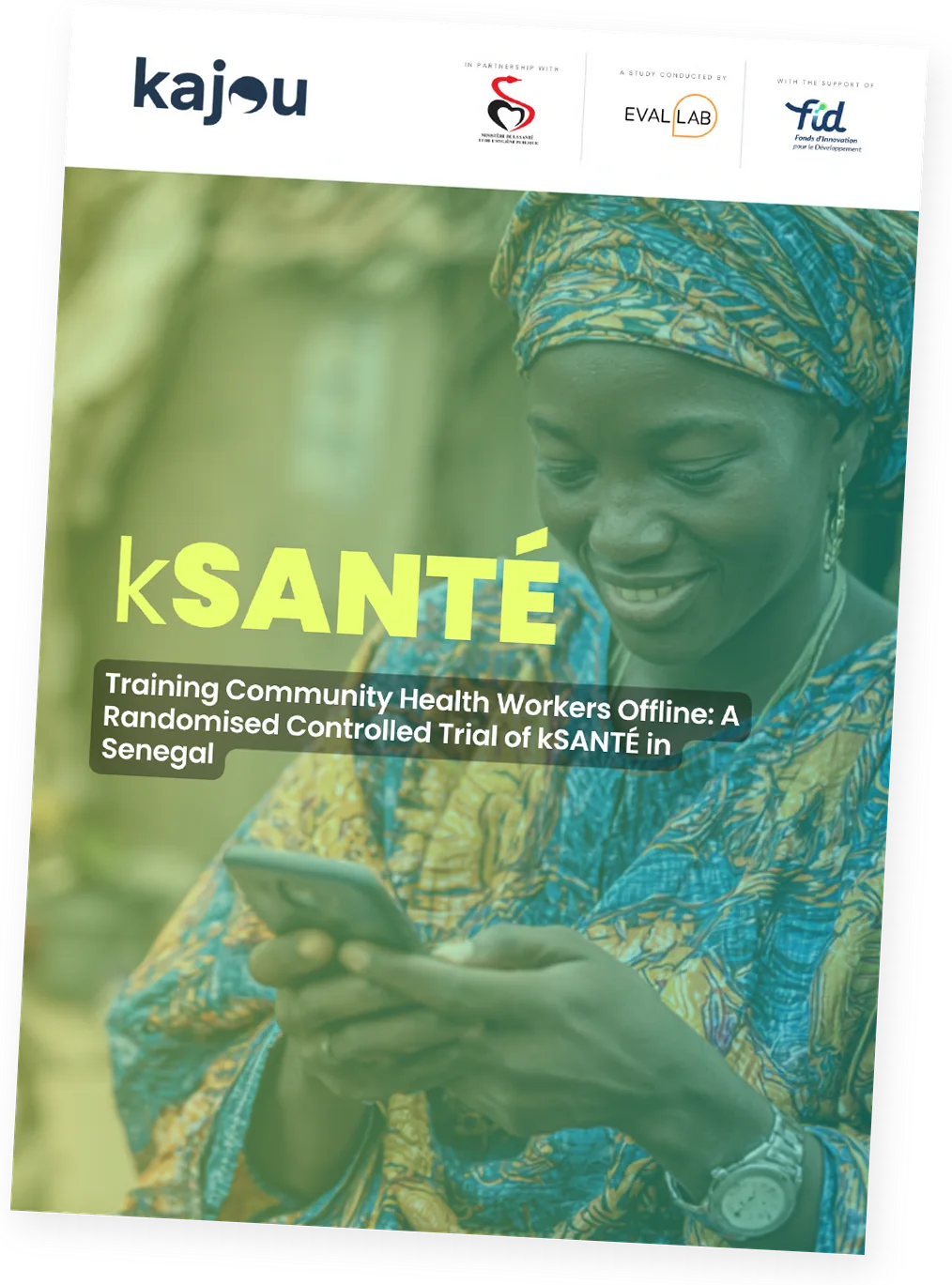
Impact report
The full evaluation, freely available
Trial design, detailed results, analysis by department and qualitative interviews with health workers: read the full evaluation conducted by Eval-Lab in Senegal.
Read the full reportThey trust us
More than 20 committed partners
Institutional partners





Funding partners










Operational partners








kSANTÉ received the award for best AI social innovation from Meta’s Llama Impact Accelerator.
Contact
Let’s work together
Ministry, NGO, funder or health operator: would you like to deploy kSANTÉ in your country, adapt it to new languages or deliver your own training content through it? Let’s talk.


Thank you, your message has been sent.
The kSANTÉ team will get back to you shortly.